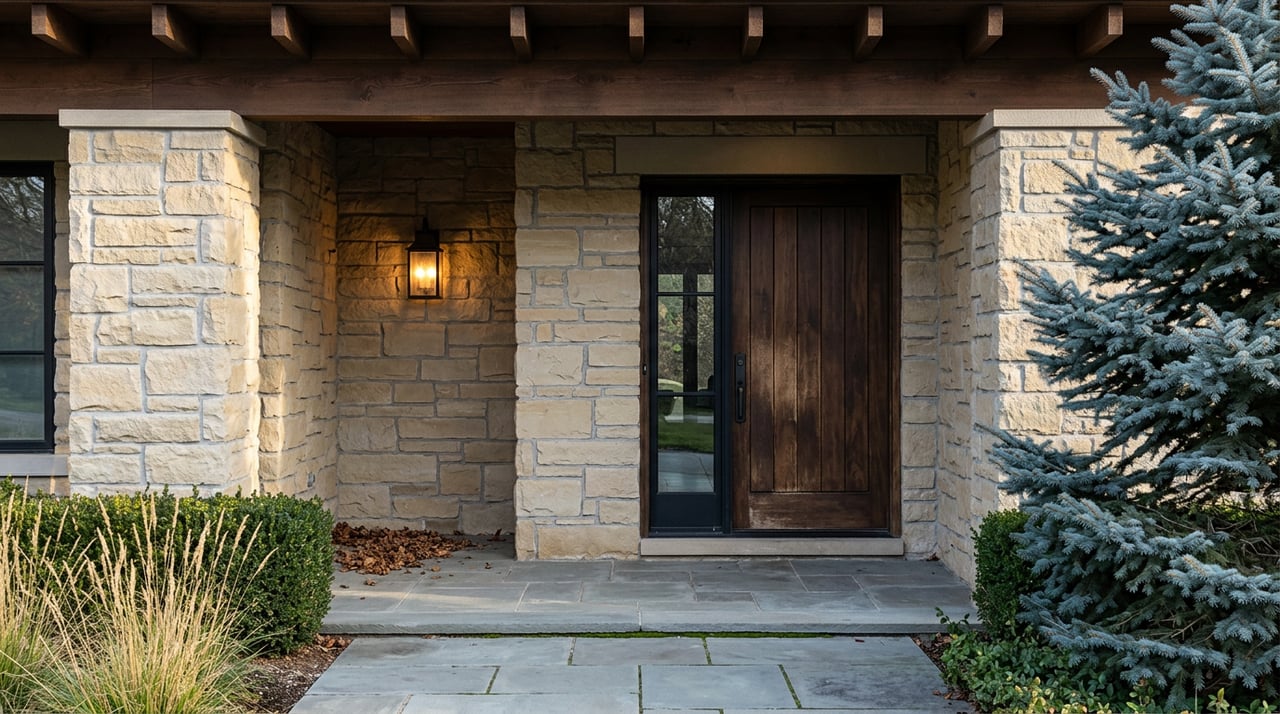
Walk the High Line Canal east of Kent Denver on any given morning and you'll hit a footbridge that looks like every other footbridge on the trail. Cross it, though, and the ground rules change without a word of warning beyond a small posted sign. No dogs. No bikes. Stay on the trail. You've just left the canal's public right of way and stepped onto Quincy Farm, a 17.5-acre property that answers to its own set of rules because it isn't, legally speaking, a park at all.
Most residents who pass it treat it as scenery, the pastoral backdrop to a canal walk that's really about somewhere else. That's a mistake this fall specifically, because the farm is in the middle of the most active stretch of physical change it's seen since the barnyard reopened to the public. A pond is being reshaped. A century-old barn just hosted its biggest party of the year. And the property's odd internal geography, the fact that it functions as two separate addresses with two separate rule sets, is the reason any of this is happening on the timeline it is.
Two Addresses, Two Rulebooks
Quincy Farm isn't one parcel. The east side, at 4450 E. Quincy Ave, holds the historic buildings: the Hopkins House, a farmhouse built in 1898 that's the oldest and most intact one left standing in Cherry Hills Village, and the center-aisle Big Barn, raised in 1934 when the property belonged to Myron Blackmer. The west side, at 4400 E. Quincy Ave, is pasture and meadow with no structures at all, and it opened to public foot traffic on its own separate timeline, years after the east side did.
That split isn't bureaucratic tidiness. It reflects the land's conservation easement. The farm transferred to the city in 2016. Catherine "Cat" Anderson and her husband bought the property in 1964 and held it for half a century. The easement, administered by Colorado Open Lands, spells out what can happen on which part of the land, which is why the west side's walking trail didn't get built until 2024, and even then in two separate phases, because a pair of great horned owls had a nesting box in the northwest corner and the city wasn't willing to disturb them mid-season. The first loop opened that March. The second waited until after nesting season ended.
If you've only ever crossed the bridge onto the east side, near the barn, you've seen half the property and none of its stranger constraints.
A Quarter of the City's Public Land Behind One Fence
Here's the number that reframes the whole thing: Quincy Farm's 17.5 acres account for 24 percent of all the public open space and parkland the City of Cherry Hills Village owns. Run that percentage backward and the city's entire inventory of public open space, every park, pond, and trail corridor it maintains, comes out to somewhere around 73 acres total.
For a city built almost entirely of private one- to five-acre estate lots, that's a strange concentration. One donated farm carries roughly a quarter of the load that the rest of the city's public land carries combined. It means the decisions made about Quincy Farm, how it's dredged, fenced, programmed, and repaired, aren't decisions about a nice-to-have amenity. They're decisions about a meaningful share of the only public land the city has.
The Pond Got Smaller on Purpose
The pond sits on the east side, fed by the High Line Canal and by a 1,000-foot well drilled into the Arapahoe Sands aquifer. It's man-made, it's been there since at least 1934, and for years it's been shallow enough and poor enough in water quality that it wasn't doing much for the wildlife that depends on it.
The city landed a $241,000 grant from Arapahoe County Open Space to fix that, and the fix isn't what you'd assume. Rather than making the pond bigger, the plan shrinks its surface footprint and digs it deeper, restoring something closer to its original historic capacity while creating better habitat for nesting and migrating birds. Nesting boxes and bat boxes are going in alongside it.
The earthwork is happening right now. The city's project updates describe the dredging as active this fall, with the contractor finishing the heavy work before winter and returning in spring to reseed, plant wetland plugs, and add trees. A March 2026 issue of the Village Crier noted that a mild winter let crews get further ahead of schedule than expected, which is the kind of detail that matters if you walk the canal regularly: expect the trail to occasionally close for short stretches during the day while trucks move material, with detour signs and flaggers posted around the work zone. It's not a permanent closure. It's a few hours here and there, and it should wrap for the season before the ground freezes.
The Barn That Used to Be Locked Is Where the Party Was
For most of Quincy Farm's life as a city property, the buildings were closed to the public except during scheduled programs, and the 1934 barn in particular sat in a state of slow deterioration. That changed with a full rehabilitation project that finished in 2025, stabilizing the structure while keeping its historic bones intact. The Big Barn's grand reopening that year drew a crowd for HawkQuest's live raptor demonstrations, a lineup of visiting chickens and goats, a horse named Petey, and food from Mile High Sliders, one of Denver's better-known food trucks.
This year the barn hosted the farm's biggest annual fundraiser, the Barn Party, on the evening of Friday, September 18. Adults only, country chic attire, $175 a ticket, benefiting Cherry Hills Land Preserve, the local nonprofit that has run the farm's programming and fundraising since 2021 in partnership with the city. It's the same organization behind the recurring bird walks led by longtime Denver Audubon volunteer Barbara Masoner, the talks from naturalist Kate Hogan on the birds, mammals, and reptiles that use the property, and the kids' art workshops taught by Julie Bennett, the art teacher at Cherry Hills Village Elementary, some held right at the farm and others just up the canal at John Meade Park.
Across all of that programming, Cherry Hills Land Preserve counted over 1,600 visitors to its events last season. That's a meaningful number for a property that, five years ago, mostly sat closed and unused.
The Rules That Don't Bend
Whatever season you visit, a few things stay constant, and they're worth knowing before you go rather than after you've walked half a mile with your dog:
- No dogs anywhere on the property, on either side
- Bicycles aren't allowed on the farm itself; lock up at the rack and walk in
- Buildings, including the Big Barn and Hopkins House, are closed to the public except during scheduled programs
- The east side has exactly one accessible parking space and no other on-site parking; the west side has none at all
- Both sides are open sunrise to sunset, not around the clock
Most of the city's other parks don't operate under rules this specific, which traces straight back to the conservation easement governing the land. Quincy Farm isn't managed the way John Meade Park or the bridle trail network are managed. It's managed the way a property subject to a conservation easement gets managed: carefully, and with an eye toward honoring the easement's terms.
What Changes This Fall, and Why It's Worth a Second Look
The city has also been quietly overhauling its Parks and Trails map this year, the first redesign since 2009, replacing the old four-digit trail numbers with descriptive names and installing new signage to match. That project was on track to be ready by summer, which means the map you might remember from a few years ago is likely already out of date if you haven't checked recently.
Put it together and Quincy Farm this fall isn't the sleepy pasture it can look like from the canal. It's a property mid-transformation on three fronts at once: a pond being physically reshaped for better wildlife habitat, a barn that spent decades closed now hosting the year's biggest party, and a trail map being rewritten to help people actually find the place. If your last walk past it was a passive one, this is the season to cross the bridge on purpose.
If you're curious about what else has changed around Cherry Hills Village lately, or you're thinking about your own place in this neighborhood's next chapter, Niki Collier is happy to talk through it over coffee, no pressure and no script required.
This article is general information, not legal, tax or financial advice. Consult a qualified professional about your situation.