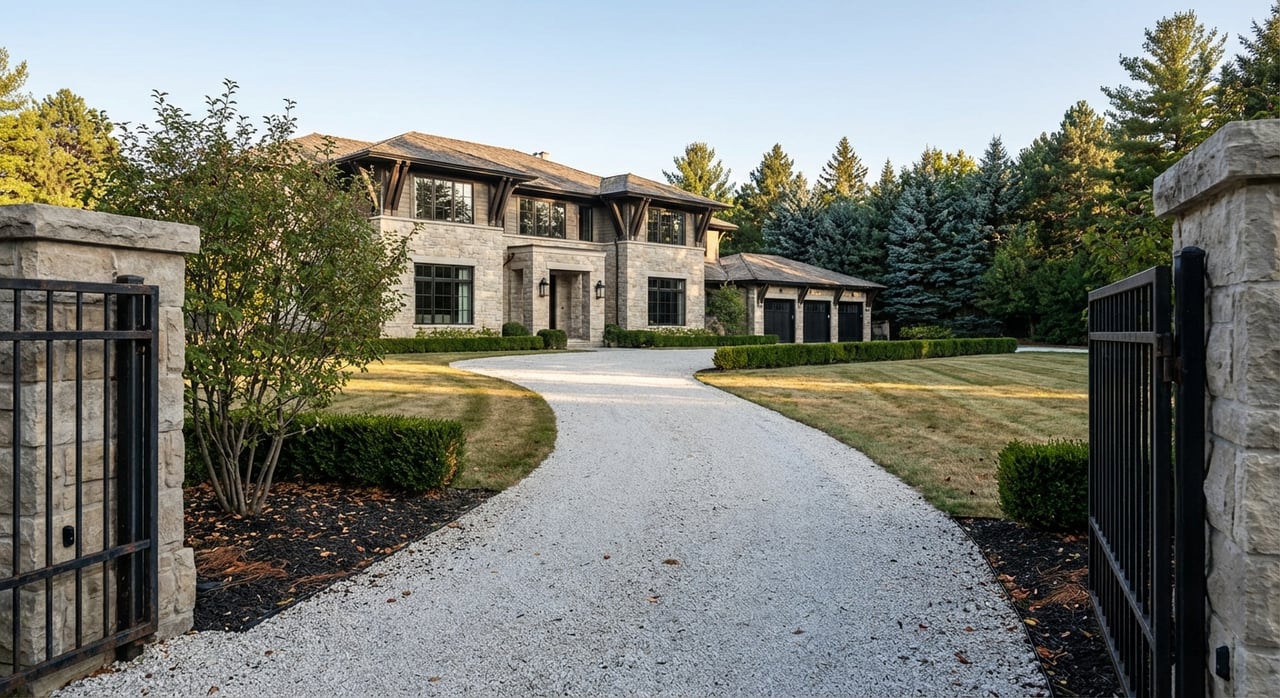
Are you seeing wildly different price numbers for Cherry Hills Village and wondering which one to trust? You are not alone. In a small, ultra‑luxury market like the Village, a single eight‑figure sale can swing headlines and confuse even savvy buyers and sellers. This guide gives you a clear framework for reading the data, shows what actually moves value here, and outlines realistic budget bands for early 2026. Let’s dive in.
Start with the numbers you can trust
You will see several “headline” prices for Cherry Hills Village, and they often disagree. That is normal for a low‑density, high‑price area. The key is to date the figures and understand what each metric measures.
- Zillow’s ZHVI, a smoothed index of typical home values, was about $3.07 million as of December 31, 2025.
- Redfin’s reported median sale price was about $2.38 million in January 2026, based on a small count of monthly closings.
- Listing‑based medians often run higher than recent closed medians, which is common in luxury segments.
Why the spread? The Village is tiny and intentionally low density. It spans roughly 6.5 square miles, has about 6,400 residents, and only around 2,300 to 2,400 housing units. With so few monthly sales, one $8 million to $20 million closing can reset a monthly median. When you read prices, compare multiple metrics and, when possible, look at 6 to 12 months of data rather than a single month. For local context on scale, see the city’s Demographics.
What actually drives value here
In Cherry Hills Village, buyers do not pay for one feature in isolation. They pay for a package: land, privacy, views, school access, and estate amenities. Understanding these drivers will help you interpret both list and sale prices.
Lot size and zoning
Land is the dominant scarcity. Much of the Village is zoned for large residential lots, and many neighborhoods preserve one‑acre or larger parcels. That design keeps density low and limits the supply of subdividable land. An extra acre on a similar lane often moves the price meaningfully. You can see the large‑lot pattern on the city’s Official Zoning Map and the broader Zoning District Maps.
Privacy and mature landscaping
The Village’s value story is tied to privacy as much as square footage. Mature tree canopy, thoughtful buffers from neighbors, and siting behind trees or gates tend to be capitalized in price on larger lots. Hedonic research finds a positive relationship between quality landscaping and home values in many markets, with the strongest effects appearing on bigger parcels and at higher price points. For the research backdrop, review this overview of landscape amenity value in residential pricing on ScienceDirect.
Views and topography
Unobstructed views of the Front Range, open space, or nearby course corridors can command a premium. Empirical work shows that view quality matters and that the highest‑quality, unobstructed views often see the largest price effects. A classic overview of view premiums is summarized in Benson et al.’s work on the value of a view. In practical terms, two comparable homes can diverge sharply in price when one has the long view and the other does not.
Schools and education
Most of the Village falls within Cherry Creek School District No. 5. Many households consider school assignment when deciding where to buy, and public listings commonly reference nearby schools. Always verify enrollment using the district’s official map.
Estate‑level amenities
At the upper end, turnkey estate features influence both buyer interest and price. Examples include indoor or outdoor courts, resort‑style pools, guest houses, barns or equestrian facilities, and extensive garages. In a market with few direct comps, one well‑equipped estate can set a new benchmark for its lane or micro‑area.
Country clubs and neighborhood cachet
Proximity to Glenmoor Country Club and Cherry Hills Country Club appears often in listing narratives and buyer wish lists. Club adjacency, quiet lanes near courses, and related social networks function as lifestyle amenities that support long‑term demand. As one example of ongoing investment, Glenmoor announced a significant clubhouse upgrade covered by BusinessDen.
How a low‑density luxury market behaves
Volatile medians are normal
With small monthly closing counts, medians and averages swing. That is why Zillow’s smoothed index, monthly closed medians, and listing medians often point in different directions. When you want a fair read on momentum, compare several measures and focus on 6 to 12 months of data rather than one month.
Appraisal and financing on unique properties
Estate homes, equestrian sites, and one‑of‑a‑kind architecture often do not fit neatly into a standard comparable set. Appraisers may bring in the cost approach, paired sales, or broader radii to support value when direct comps are thin. Buyers and sellers should plan early for appraisal conversations and lender needs. The Appraisal Institute outlines best practices for special‑purpose and unique assets in its valuation insights.
List price vs sale price dynamics
High‑end listings sometimes start aspirational to test a niche buyer pool. Modern marketing and staging can reduce time on market, yet sale‑to‑list ratios will still fluctuate month to month because the sample is so small. When you see a ratio or days‑on‑market figure, note the timeframe and the number of closings behind it.
Practical price bands for early 2026
These bands are directional and reflect the Village’s early‑2026 landscape. Because one or two large deals can shift medians, use them as a guide and pair them with fresh, property‑specific comps.
- Entry or lower end inside the Village, about $1.5 million to $2.5 million: Infrequent and often older ranch homes, homes due for modernization, or smaller parcels on the municipal edges. These are snapped up quickly when priced to condition and land.
- Core market or move‑up, about $2.5 million to $4.5 million: Updated single‑family homes on roughly 0.5 to 2 acres, often with mature landscaping and partial estate features like a pool or guest space. Representative recent transactions in this band have included sub‑2 acre lots on quiet lanes with renovated interiors.
- High‑end estates, about $4.5 million to $8 million: Larger renovated estates or newer builds on premium lanes with 1 to 3 acres and a fuller amenity set, such as courts, pool houses, and multi‑car garages.
- Trophy or ultra‑luxury, $8 million and up: True estate parcels on 2 to 5 or more acres inside the Village boundaries are rare. These homes show custom architecture, equestrian improvements, or historic significance. A single closing in this tier can dominate monthly headlines and skew averages.
Practical translation: with a $3 million budget, you will usually shop the core band for a renovated home on roughly 0.5 to 2 acres. If you want larger acreage with turnkey estate amenities and strong privacy, plan for the $4 million and up range.
How to value a specific property in the Village
Use a structured approach so you are not misled by one headline number.
- Define the land context. Start with the parcel’s size, shape, topography, and zoning. Reference the city’s zoning map to understand density and constraints nearby.
- Pull 12 months of comps, then go qualitative. With few monthly closings, rely on a full year of area sales. Compare lot size, privacy, views, amenities, and proximity to clubs. Adjust for differences rather than chasing price per square foot alone.
- Price the privacy and the view. Walk the site. Note buffers, tree canopy, and sightlines. Research shows these attributes can add a meaningful premium when quality is high.
- Verify school assignment. Many households weigh school boundaries in their decision. Confirm the address on the district’s official map.
- Plan for appraisal early. If the home is unique or acreage‑heavy, talk with your lender about engaging an experienced luxury appraiser and be ready with a thorough comp and improvement package. See the Appraisal Institute’s guidance for context.
- Watch timing and marketing. Seasonality is mild but present. High‑end marketing, staging, and off‑market networking can expand the buyer pool and support a tighter list‑to‑sale spread.
The bottom line
Cherry Hills Village is an ultra‑low‑density, land‑driven market. Lot size, privacy, views, school‑district access, and estate amenities do more to move price here than in denser suburbs. If you use dated, multi‑source metrics and pair them with on‑the‑ground comps and a clear view of land and lifestyle, you will make sense of the numbers and navigate pricing with confidence.
If you appreciate thoughtful, design‑forward decision making, keep exploring ideas with Niki Collier.
FAQs
What is the typical home value in Cherry Hills Village in 2026?
- As of December 31, 2025, Zillow’s smoothed index put the typical value near $3.07 million, while January 2026 closed medians were closer to $2.38 million due to small monthly sample sizes.
Why do different sites show different prices for the same area?
- They measure different things and the Village has very few monthly closings, so a single high‑end sale can swing a median while smoothed indices move more slowly.
How much does acreage add to price in Cherry Hills Village?
- Acreage is a primary driver because large lots are scarce under local zoning; even one additional acre on a comparable lane can translate into a materially higher price.
Do schools affect home prices in Cherry Hills Village?
- Many buyers consider school assignment when choosing a home; most of the city is within Cherry Creek School District No. 5, which you can verify on the district’s official map.
How should I handle appraisal on a unique estate in the Village?
- Plan early with your lender and an experienced appraiser, and support value with 12 months of comps, cost data, and a clear list of improvements, as recommended by the Appraisal Institute.